OpenAct
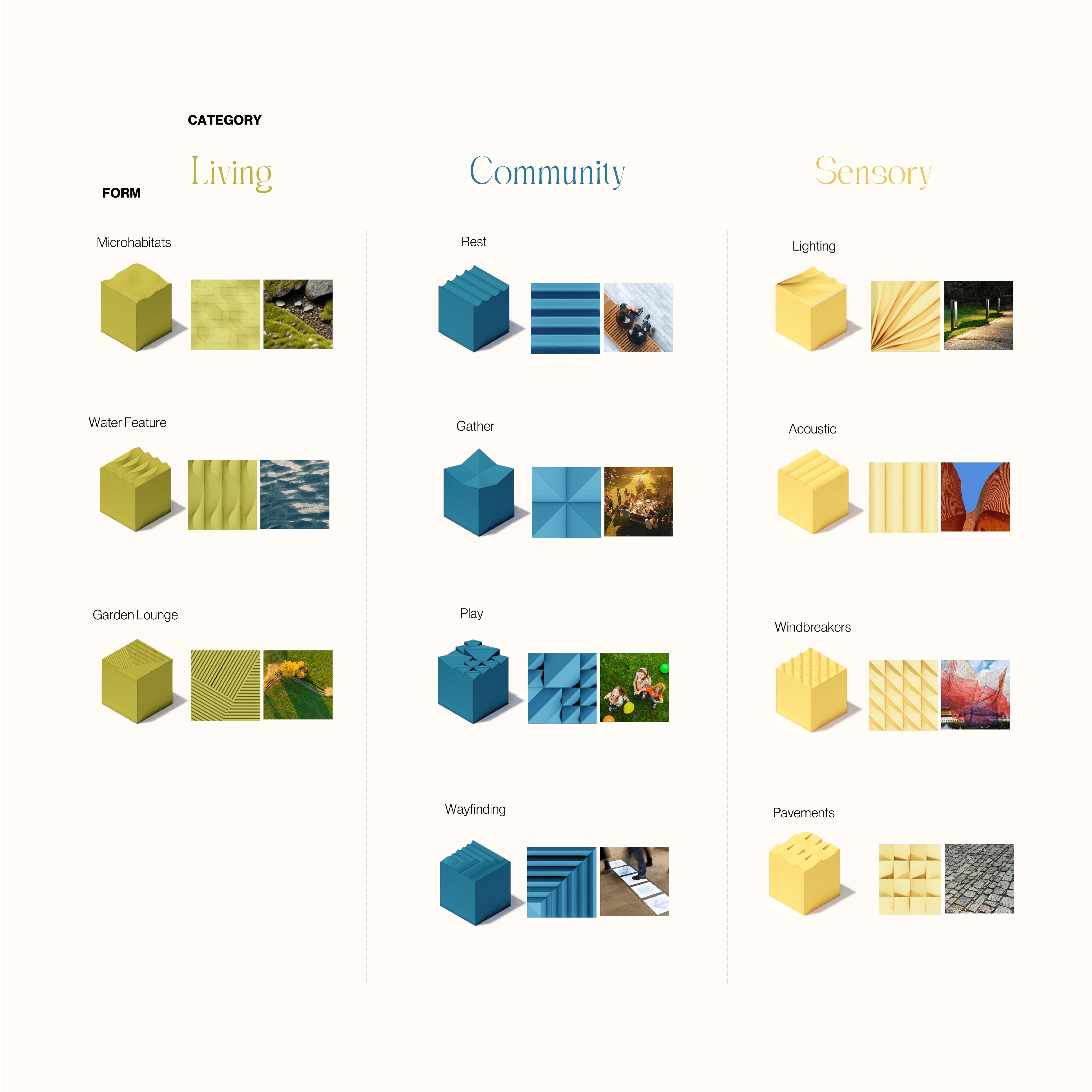
As cities grow denser, large-scale infrastructure continues to shape the urban fabric and yet the residual spaces it leaves behind, particularly beneath elevated corridors, often remain unprogrammed, inaccessible, and ignored. These zones fall outside conventional planning models, leading to fragmented, underutilized urban conditions. While policy conversations center on activation, the means to engage these ambiguous spaces meaningfully remains limited. This research proposes OpenAct, a design framework developed to support the assessment and adaptive transformation of neglected public spaces under elevated corridors. It enables designers and urban practitioners to see, assess, and activate complex sites where ownership is unclear and conventional tools fall short. OpenAct is structured around a three-part structure: Sense, Shape, and Shift. It supports context-sensitive decision-making by combining modular physical blocks, interactive projections, and participatory cues. Rather than delivering fixed outcomes, it encourages users to prototype, reflect, and iterate to bridge environmental data with lived experience. Ultimately, OpenAct challenges static participation & toolkit models by introducing a flexible, feedback-driven approach to spatial design. It reframes activation as an ongoing process of engagement and responsiveness, offering a living system to support the evolving needs of neglected urban spaces.
AS PART OF
Academic, RMIT University
OUTPUT
Exhibition Design; Placemaking; Interaction Design; TouchDesigner; Fabrication; Immersive
Year
2025
TYPE
Exhibition Design